What makes a litter box easier for an older cat to enter?
A good litter box for a senior cat should be easy to step into, roomy enough to turn and dig, and close to the places your cat already spends time. Start by watching how your cat approaches the current box: if lifting a leg over the rim looks difficult, trial a lower entry beside the familiar setup and see whether entering and leaving becomes easier. There is no single entry height that suits every cat, so judge the fit by your cat’s movement rather than a product label.
Quick check: compare the entry with your cat’s comfortable step, preserve usable floor space, and put the box on an easy route without stairs where possible. Keep the familiar box during a trial. A sudden change in box use can have a medical cause, so contact your veterinarian instead of assuming the box alone is the problem.
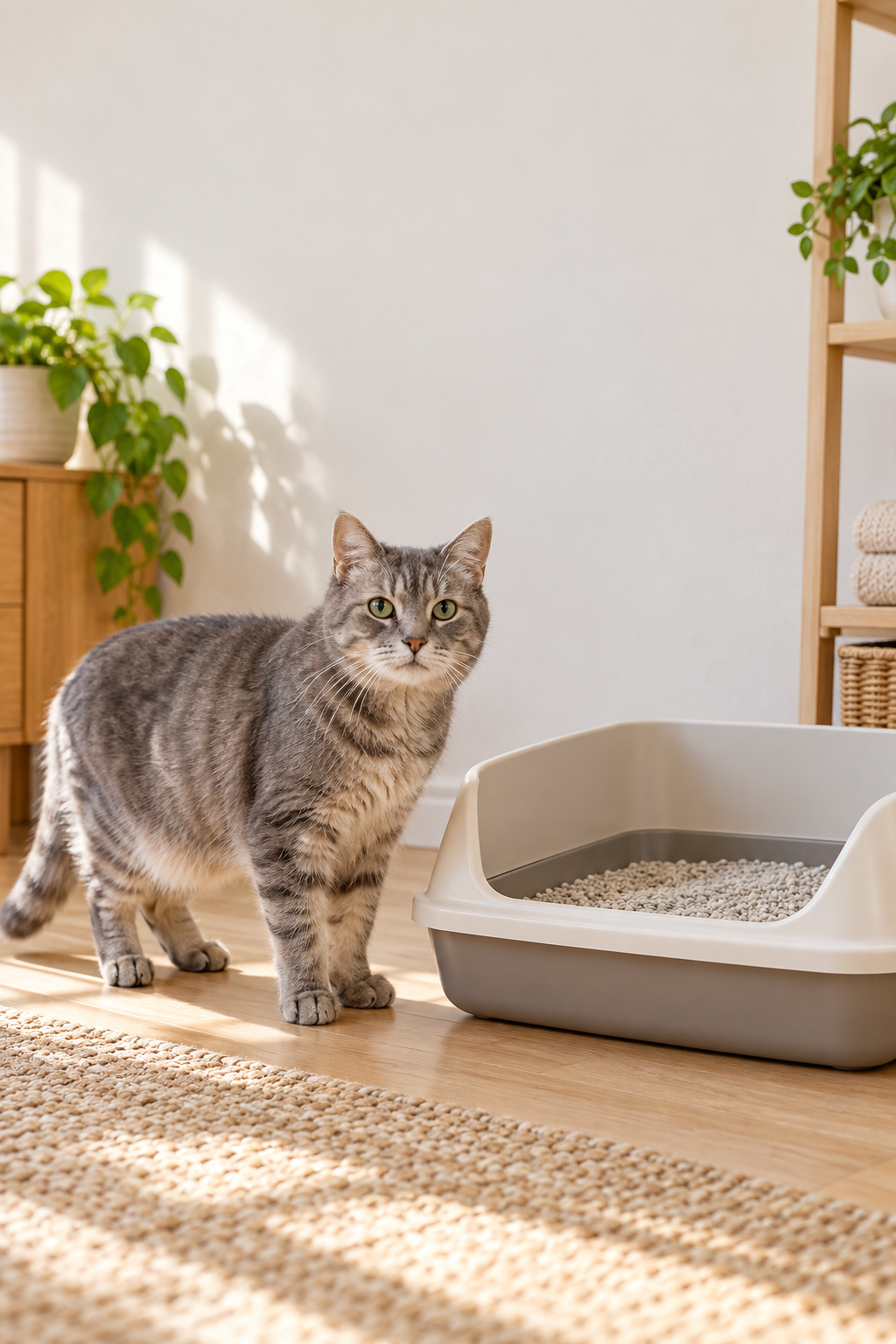
What makes a low-entry litter box easier to use?
A lower opening reduces the height your cat must clear to enter. The box still needs enough interior room for the cat to turn, dig, and cover. Check the usable floor area, not just the outside measurements: thick rims, sloped walls, and a hood can take away space inside.
Observe your cat standing beside the current box. Does the cat pause, brace on the edge, lift a front paw and stop, or climb over with a stiff movement? Those are reasons to try an easier entry, not proof of arthritis. Let your cat’s own comfortable step guide the choice; product listings rarely describe how a particular cat will move.
Choose a box by the fit, not a claimed “senior” size
- Check the entrance. Look for a broad, unobstructed opening your cat can cross without jumping. If a ramp or step is needed, make sure it is stable and does not block the opening.
- Keep the inside usable. Compare the interior length and width with your cat’s normal turning and digging space. A low front with very high sides may help contain kicked litter, but it should not force an awkward entry or leave too little floor room.
- Check stability and footing. Set the pan on a level surface that does not rock or slide as your cat steps in. Keep the path clear of clutter and sudden obstacles.
- Place it on an easy route. Choose a quiet, familiar location near the areas your cat uses, and avoid making the cat climb stairs to reach it when possible. In a multi-level home, consider an accessible box on the level where the cat spends time.
- Trial before replacing. Put the new box near the existing one with familiar litter. Give your cat a choice and watch which box is used; do not remove the accepted setup just because the new one looks more accessible to you.
Separate box access from litter-material acceptance
When you trial a lower entrance, keep the familiar litter at first. Changing the box and the material together may tell you that the combined setup worked, but it cannot show which change helped. These five dated household reports show why access, texture, and cleanup need separate notes rather than one universal “senior” product rule.
| Date | Starting condition and change | What the household observed | Evidence boundary |
|---|---|---|---|
| August 12, 2023 | One household replaced a powdery, fragranced regular litter with a fragrance-free, non-clumping type. | The cats accepted the replacement. | The cats’ ages were not reported, and scent and format changed together, so the decisive feature is unknown. |
| August 12, 2023 | In a separate household, adding another tray did not solve an 18-year-old cat’s stool misses; one tray then changed from corn-cob litter to a different product. | The cat defecated in that tray on the first day. | A first-day result does not establish lasting acceptance, and the replacement’s material was not independently verified. |
| February 18, 2025 | An 18-year-old cat’s crystal routine was difficult to clean; a clumping litter was then tried. | Higher urine volume made the clumping litter solidify instead of producing easy-to-remove clumps. | No final replacement or successful long-term setup was reported. |
| August 6, 2026 | A household changed to a larger low-entry tray, sensitive-paws litter, and pads under the tray at the same time. | The caregiver reported fewer misses. | Because three parts changed together, the litter’s effect cannot be separated from box access or pad placement. |
| September 24, 2026 | A cat had bowel movements outside the box while pine pellets were in use, then the household changed the litter. | The caregiver reported no recurrence through the cat’s 20th year. | The replacement material was not identified, so the report cannot support buying a specific alternative. |
What this changes in the trial: first test the easier entrance with familiar litter. If access improves but texture or cleanup still causes a problem, test one material change in a separate tray and record repeated use. This is an inference from the bounded reports above, not proof that one litter type suits every older cat.
Watch the full route, not only the rim
Does a senior cat with arthritis need a special litter box?
A low-entry, roomy box may make access easier for a cat with reduced mobility, but the best arrangement depends on the cat’s movement and the home. The 2021 AAHA/AAFP life-stage guidance says litter boxes should be easy to access; cats with mobility issues may need a lower box height, placement near their core areas, and fewer stairs. It does not set one universal entry measurement.
If your cat has diagnosed arthritis or seems painful, ask your veterinarian about the home setup along with treatment. A box adjustment can reduce an obstacle, but it does not diagnose or treat joint disease.
When litter box trouble needs a vet check
New accidents, hesitation, or a sudden change in litter habits can reflect pain, urinary or digestive disease, stress, or a setup issue. The AAHA/AAFP guidance recommends a veterinary evaluation for senior cats with elimination problems. Note when the change began, whether urine or stool is affected, and any changes in walking, jumping, appetite, or drinking; share those observations with the clinic.
Straining to urinate with little or no urine is an emergency. Cornell Feline Health Center advises immediate veterinary attention for a possible urinary blockage. Do not wait to see whether a lower box fixes it.
Common questions
How low should a litter box entry be for a senior cat?
There is no single evidence-based height that fits every senior cat. Compare the opening with the step your cat can make comfortably, and watch the cat use the box. Ask your veterinarian for help if movement appears painful or difficult.
Can I cut down the side of a plastic storage bin?
A large open container can provide useful floor space, but a cut edge must be smooth, stable, and free of sharp points. Do not leave a jagged opening, and check that cutting the wall has not made the container flex or tip. A purpose-made low-entry pan may be simpler.
Should I switch all at once to a low-entry litter box?
Keep the familiar box available while your cat tests the new one. Use the familiar litter and compare which setup the cat chooses. Once the new box is being used reliably, you can decide whether to keep both or gradually remove the old one.
My older cat started going beside the box. Is it just age?
No. Age alone does not explain a new change. Mobility, pain, urinary or digestive problems, stress, and box access can all matter; arrange a veterinary check and record what you observe.
Try this today: watch one normal approach to the box, note the rim your cat must cross, and trial a stable lower entry nearby while leaving the familiar box in place.
Sources
- AAHA, Senior Cats: Elimination — accessible boxes, lower height for mobility issues, nearby placement, and avoiding stairs.
- AAHA, General Litter Box Considerations — accessible edges, box size, and prompt veterinary attention for house-soiling.
- AAHA, Behavior and Environmental Needs: Senior Cats — behavior changes and mobility as possible signs of health issues.
- Cornell Feline Health Center, Feline Lower Urinary Tract Disease — straining with little or no urine as a medical emergency.
This guide helps you assess litter-box access. It does not diagnose arthritis or other health conditions; ask a veterinarian about new or worsening changes.
If interior dimensions are the limiting factor, use the measurement checks in choosing a litter box for a large cat.
Pet health disclaimer
This content is for general information and does not constitute veterinary advice, diagnosis, or treatment. If your cat has abnormal symptoms, contact a veterinarian. Do not delay veterinary care because of something you read here.